The Strauch Hypercube — Narduli Studio
“The hypercube has an infinite number of dimensions. To me it became a metaphor for the infinite possibilities of discovery that happen within this space.” - Susan Narduli
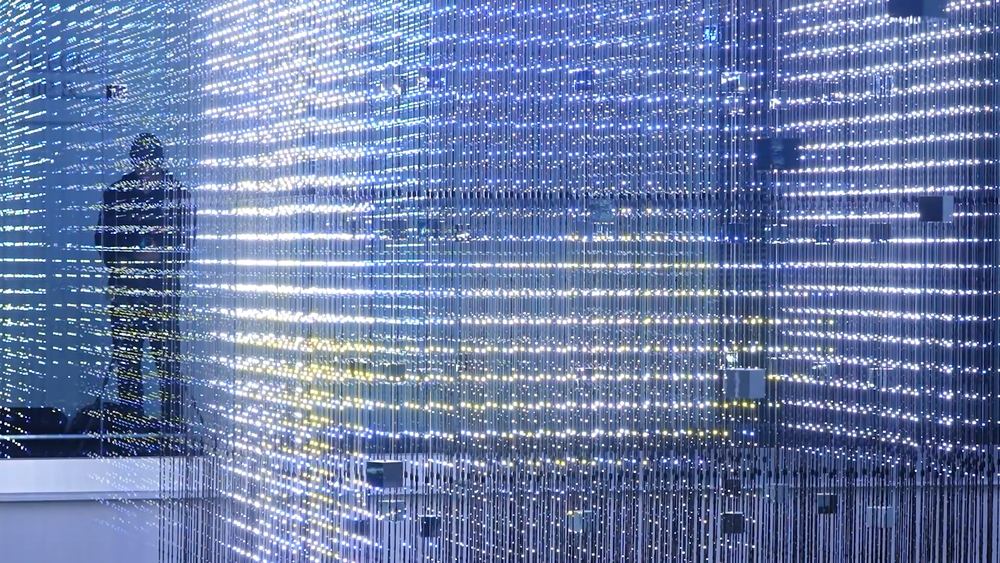
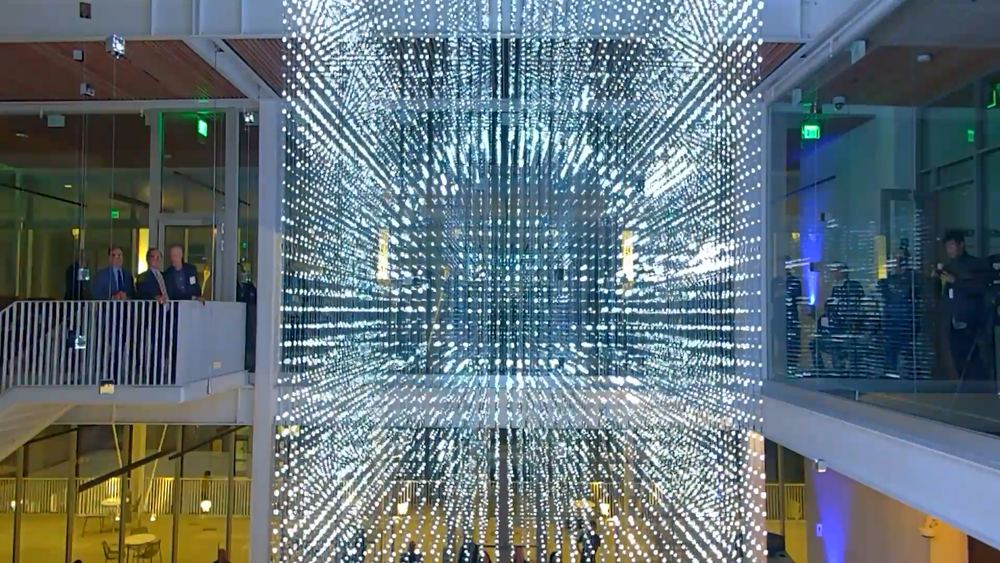
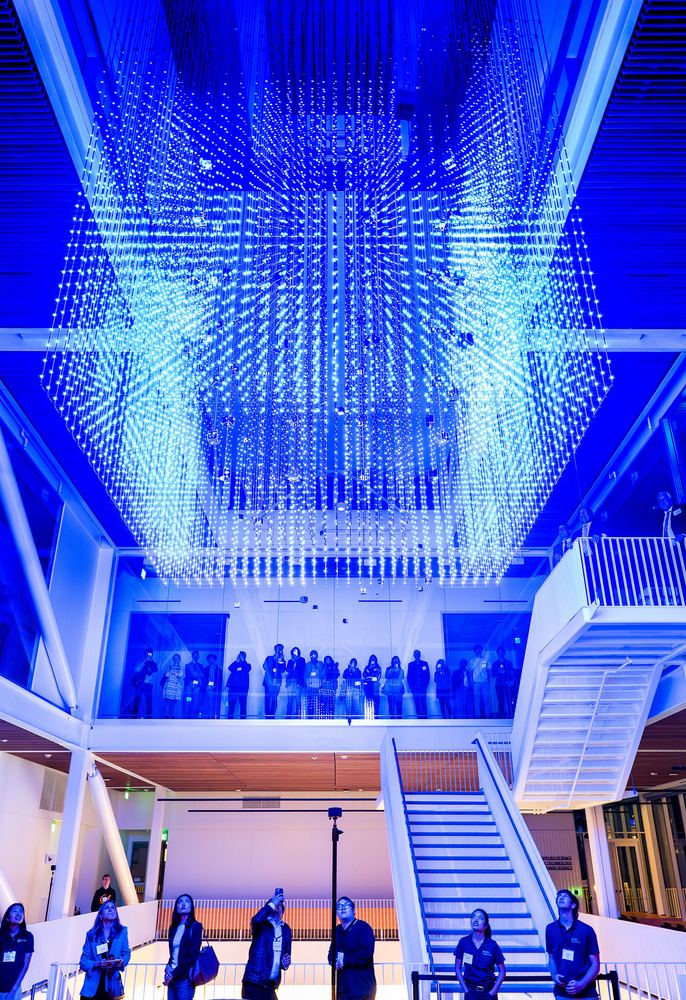
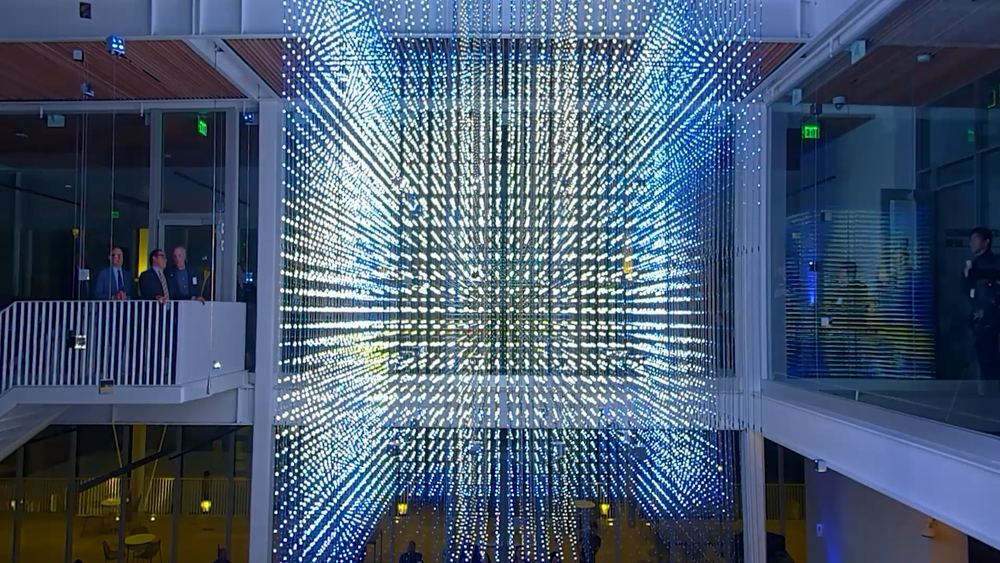
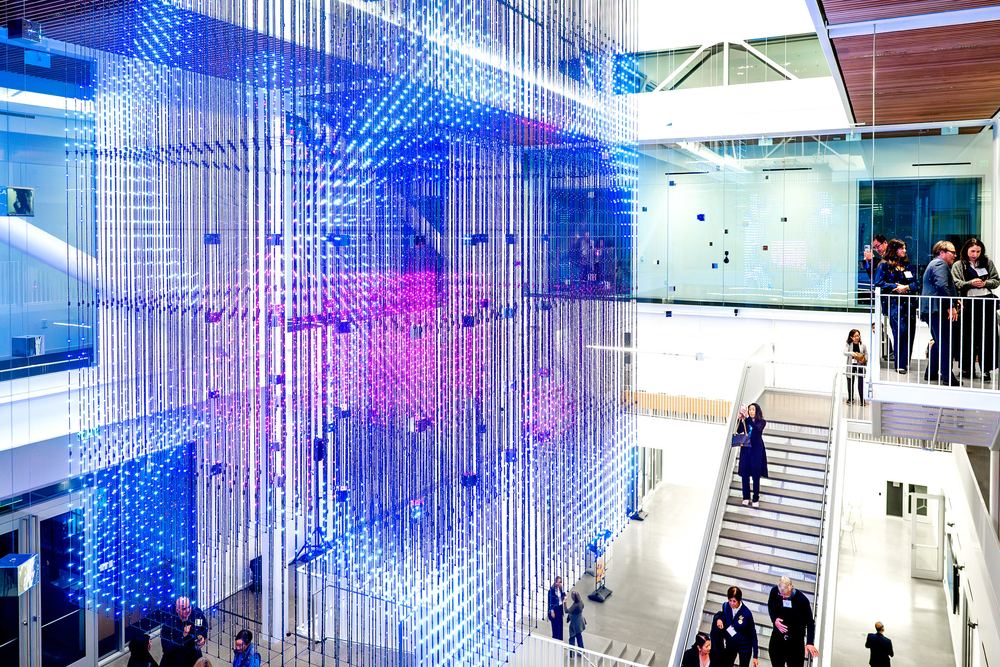
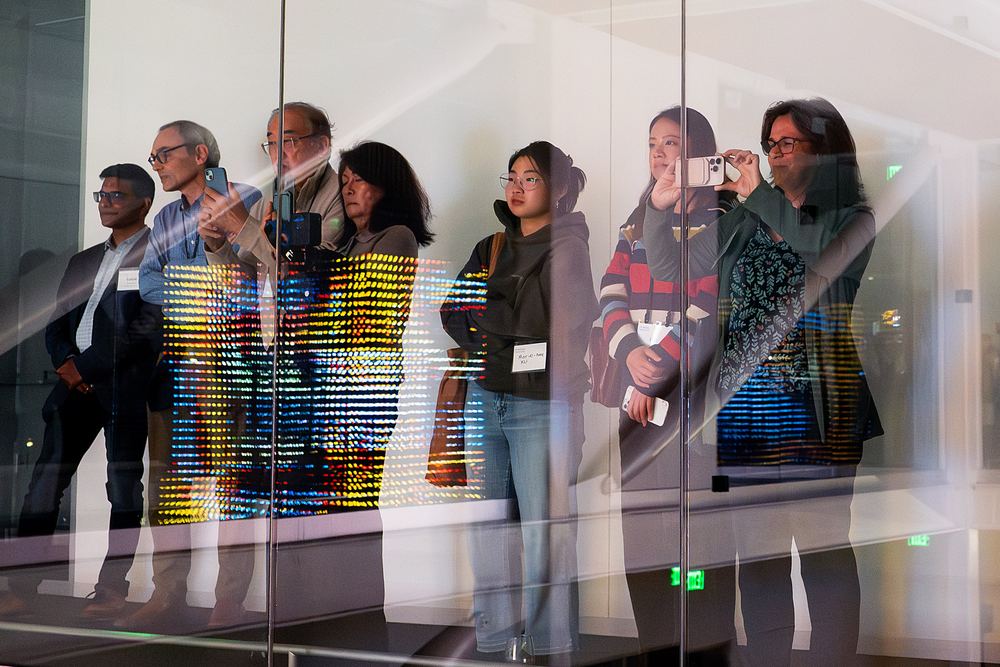
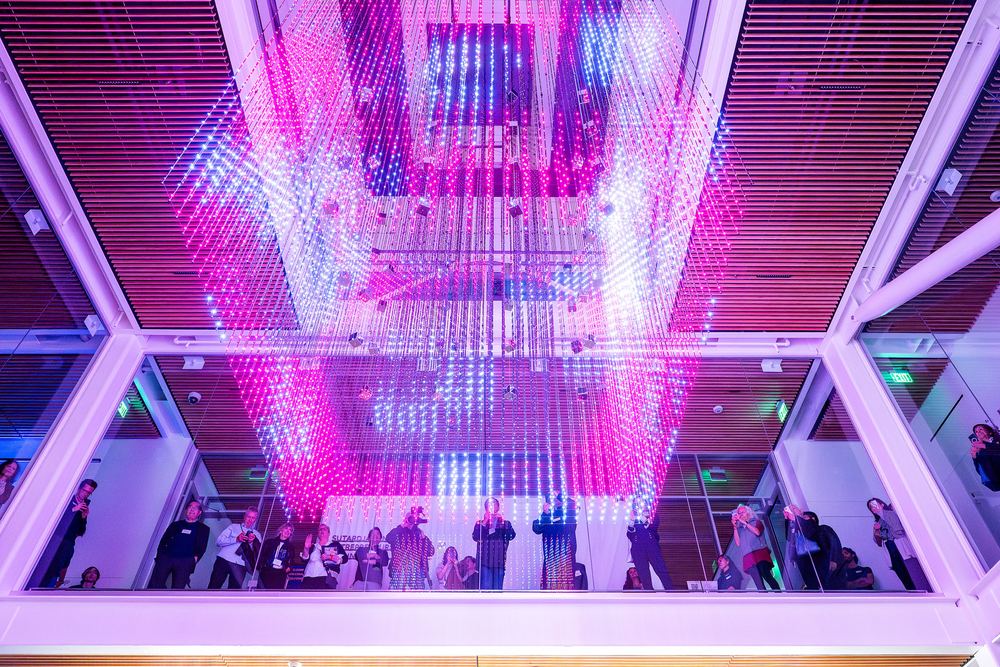
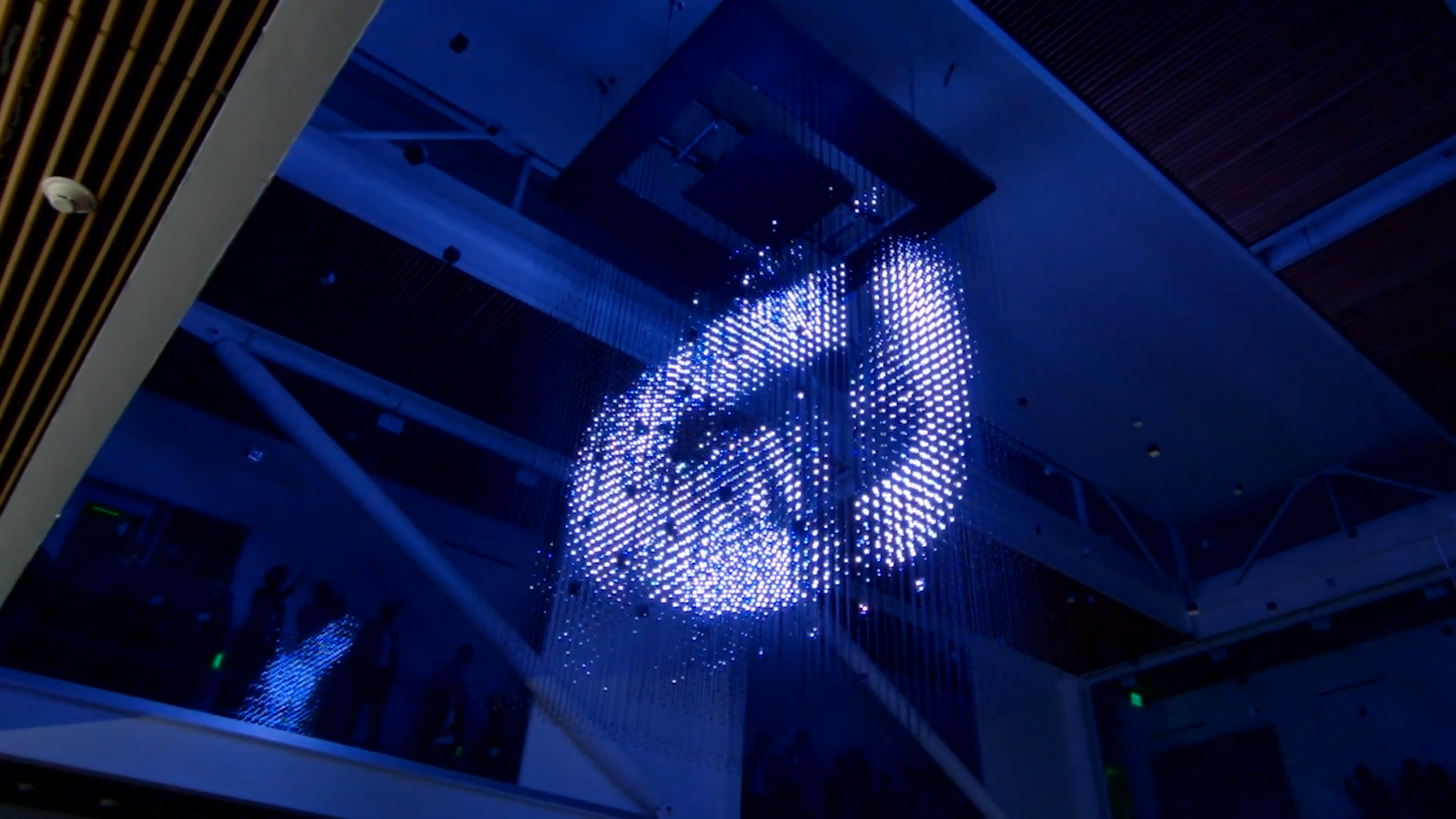
Suspended within the atrium of UC Berkeley’s Bechtel Engineering Center, The Strauch Hypercube is a three-dimensional LED artwork by artist Susan Narduli. Two nested cubes formed from a Cartesian grid of light create a dynamic spatial display whose generative animations evolve continuously over time.
PROJECT BRIEF & CHALLENGES
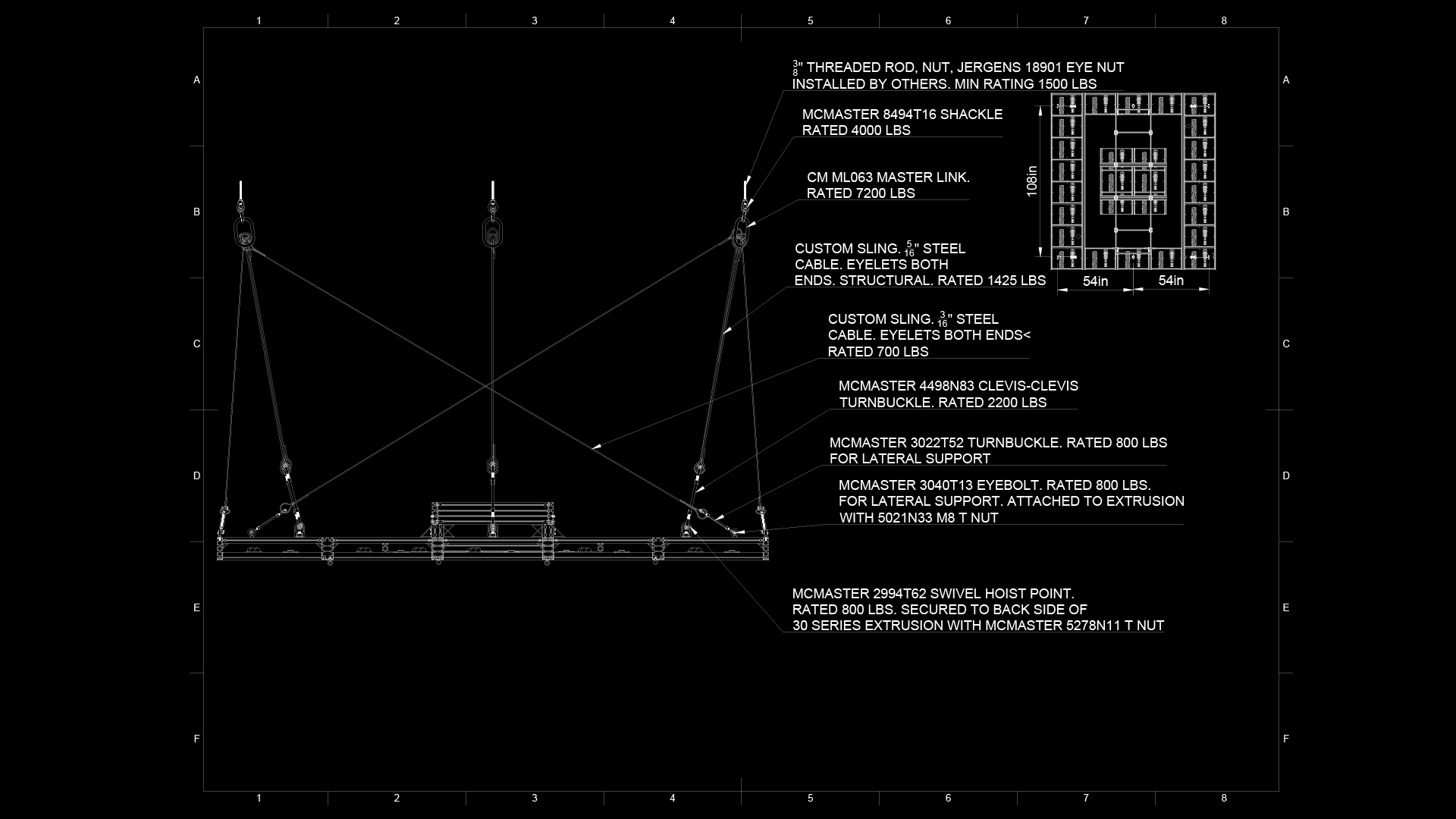
The Strauch Hypercube, created by artist Susan Narduli, was commissioned for the atrium of UC Berkeley’s Bechtel Engineering Center. The installation required translating the conceptual geometry of a hypercube into a physical artwork suspended within a large architectural void.
Unlike conventional LED displays, the piece needed to function as a three-dimensional field of light, visible from multiple vantage points throughout the building while maintaining the clarity of a minimal geometric form. The project introduced simultaneous constraints across spatial geometry, suspension, pixel distribution, and system infrastructure while supporting generative content designed to evolve continuously over time.
APPROACH
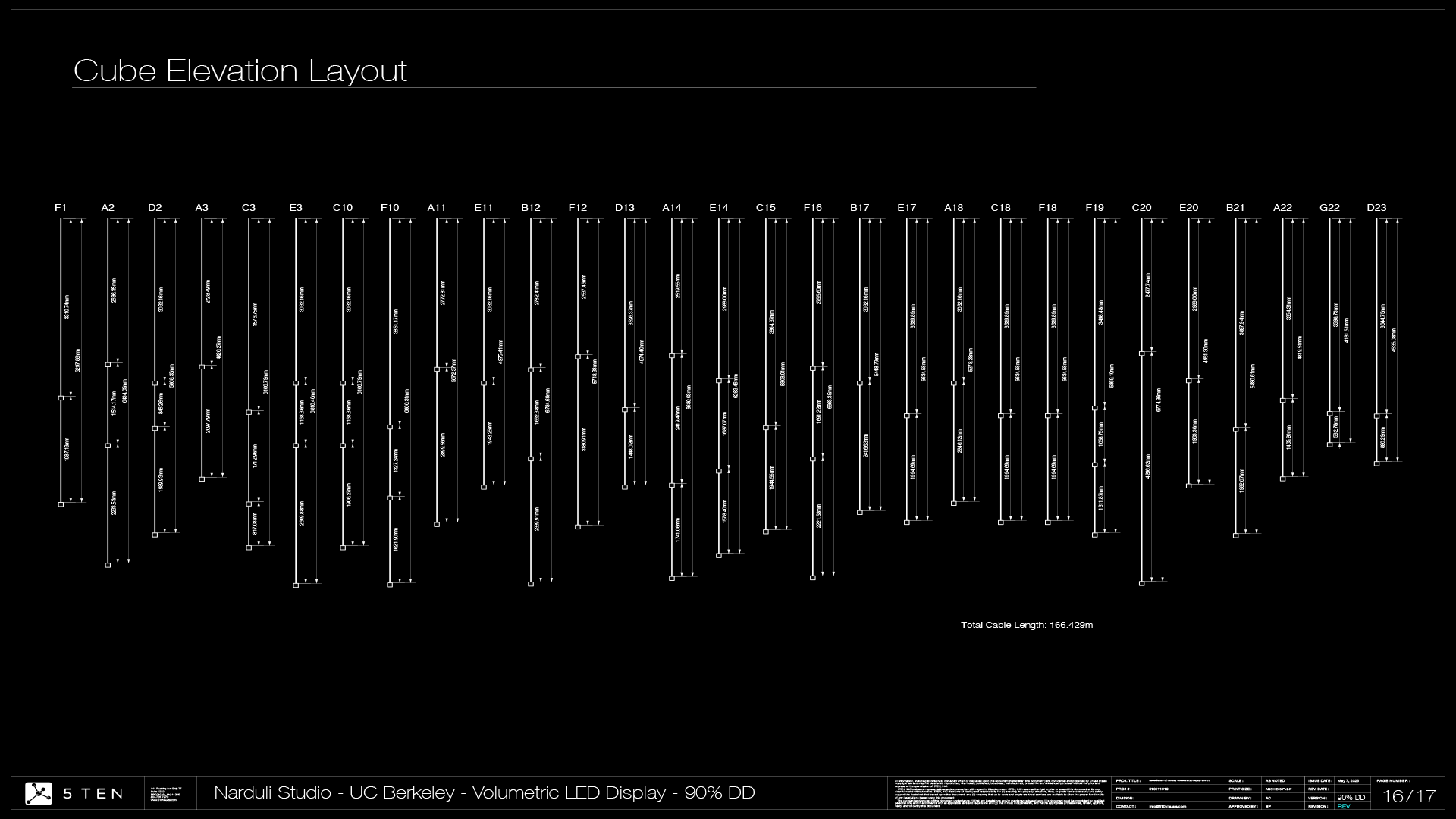
Working closely with Narduli Studio, 5 TEN developed a volumetric LED architecture designed to translate the artist’s concept into a spatial system of light.
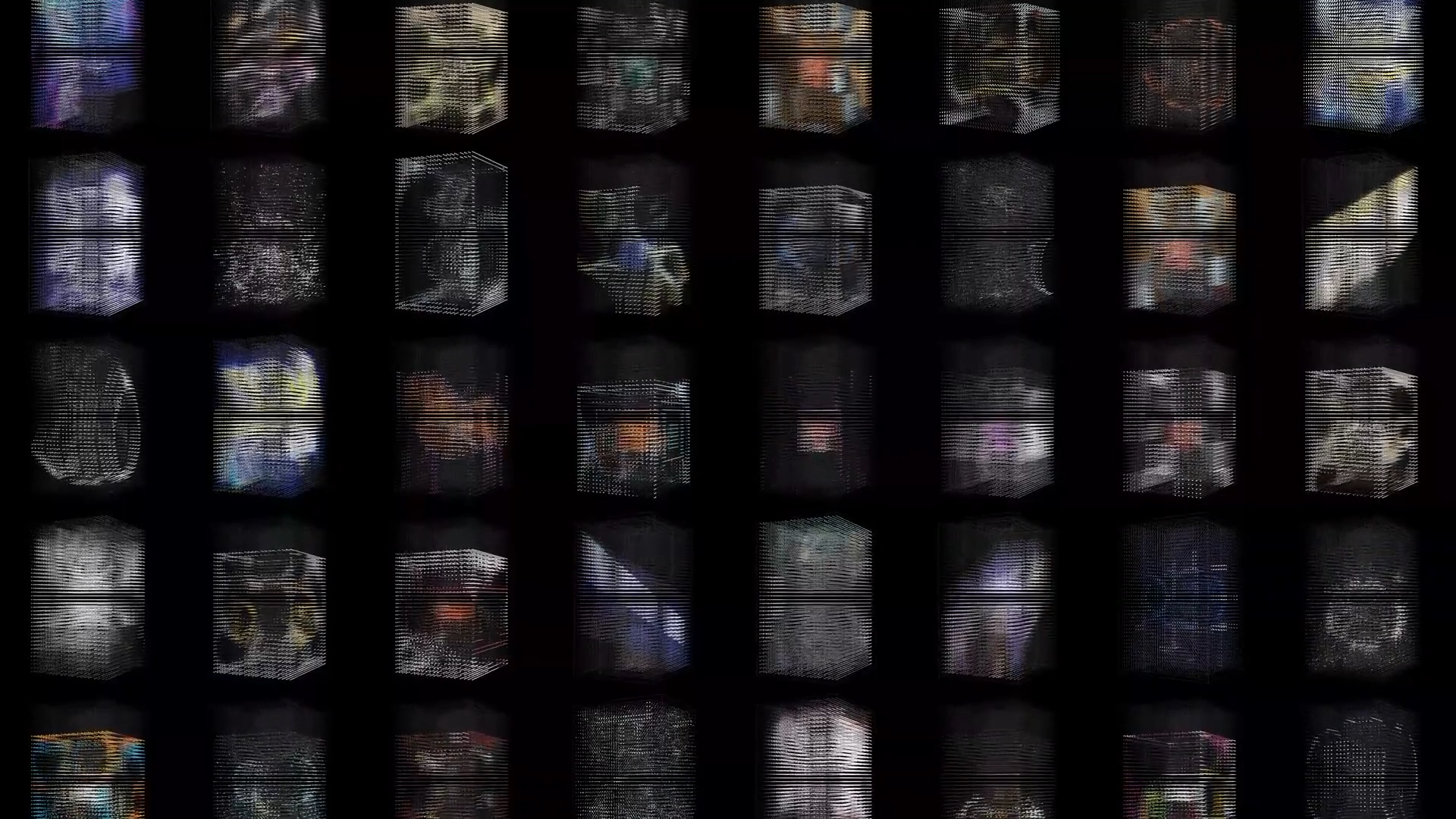
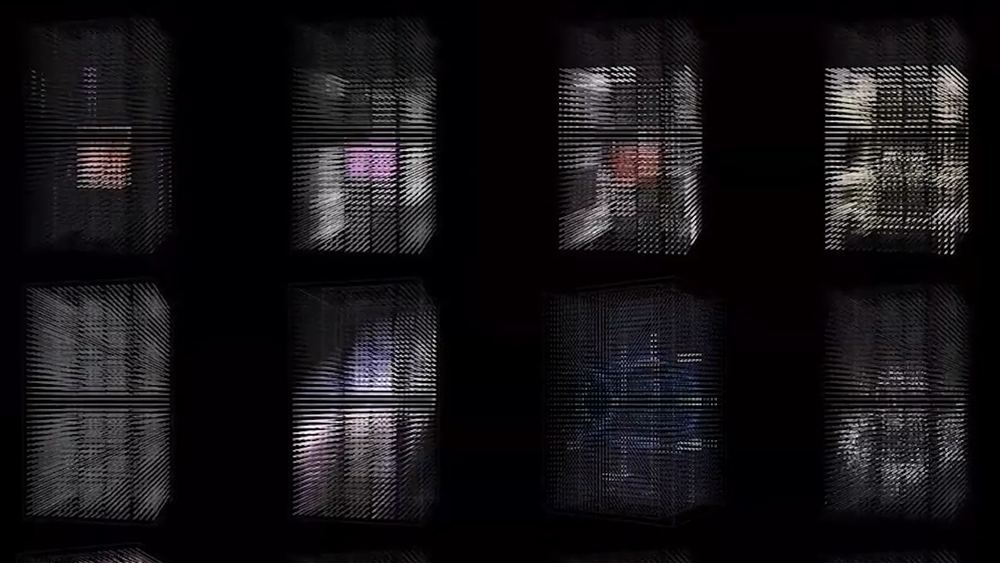
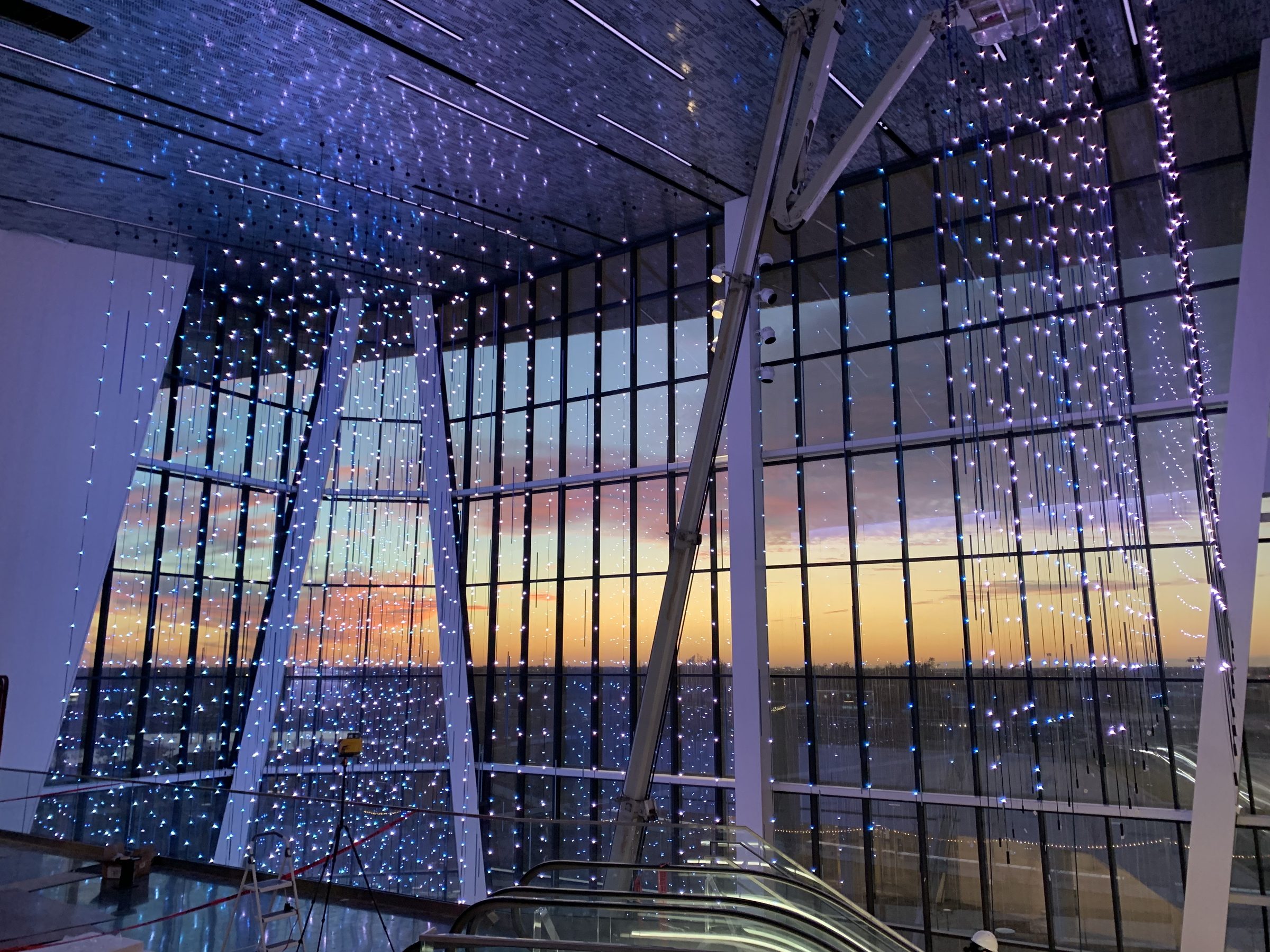
The installation consists of two suspended cubes defined by a Cartesian grid of individually addressable LED nodes, forming a luminous framework within the atrium. Generative animations driven by algorithmic rules move through this grid, producing patterns of color and motion that evolve continuously rather than repeat.
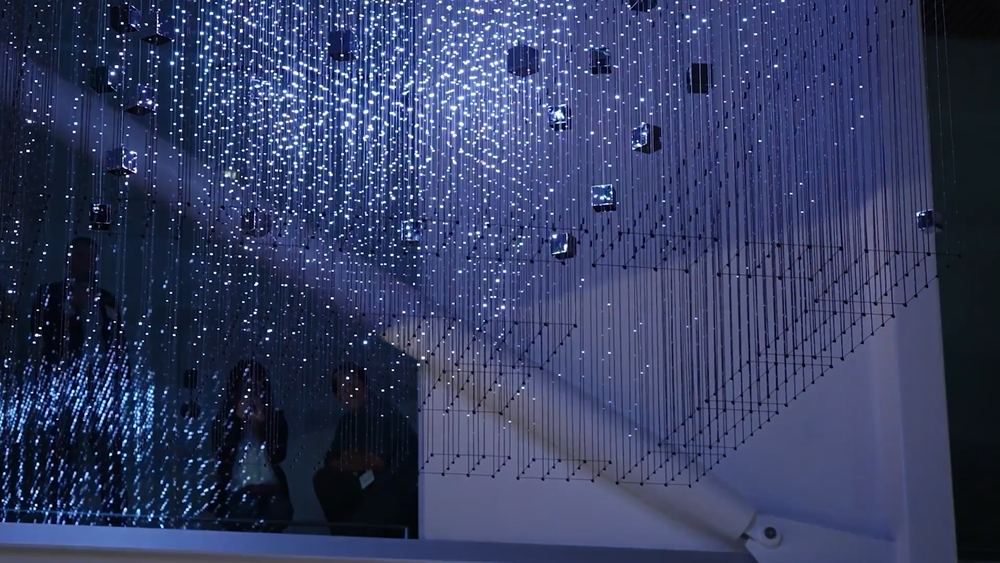
In addition to the illuminated grid structure, the sculpture incorporates mirrored aluminum cubes suspended throughout the installation volume. These reflective elements capture and scatter the emitted light, extending the visual field of the artwork and introducing moments of randomness within the otherwise ordered geometry.
SOLUTION
To realize the sculpture, 5 TEN engineered and delivered a custom volumetric LED system capable of supporting the spatial geometry and operational requirements of the artwork.
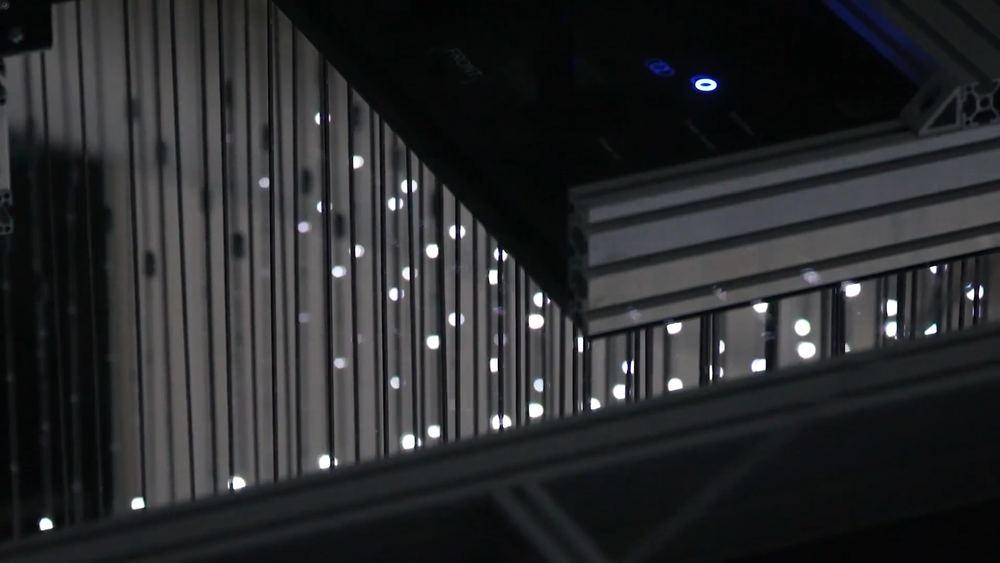
The system integrates LED nodes arranged across suspended structural strands, supported by distributed power and data infrastructure and controlled through a volumetric pixel mapping system. Together these elements form a three-dimensional display environment capable of rendering generative animations across the nested cube geometry.
The final installation operates as a spatial light sculpture, translating algorithmic content into a dynamic visual environment that reflects the spirit of experimentation and discovery within UC Berkeley’s College of Engineering.



Featured Projects









Let's Work Together
Every project is a connection. From concept to delivery, we bring precision and artistry to every frame.


