Virtual Sky — Narduli Studio
By translating real-time light and color into an expansive digital sky, Virtual Sky invites people to see the Convention Center not simply as a building, but as an environment — a constantly shifting place that reflects both the physical sky and the rhythms of city life.
PROJECT & CHALLENGES
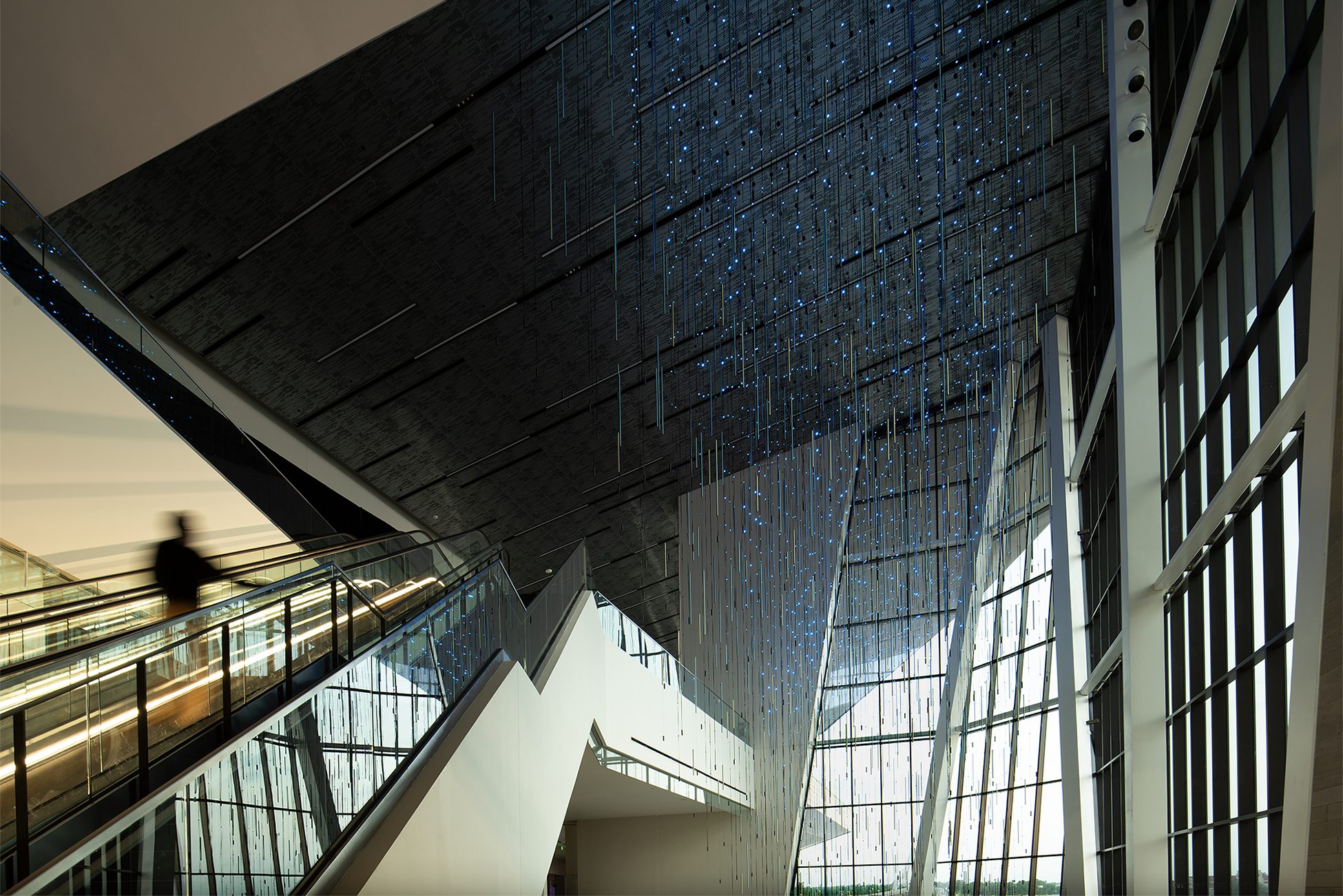
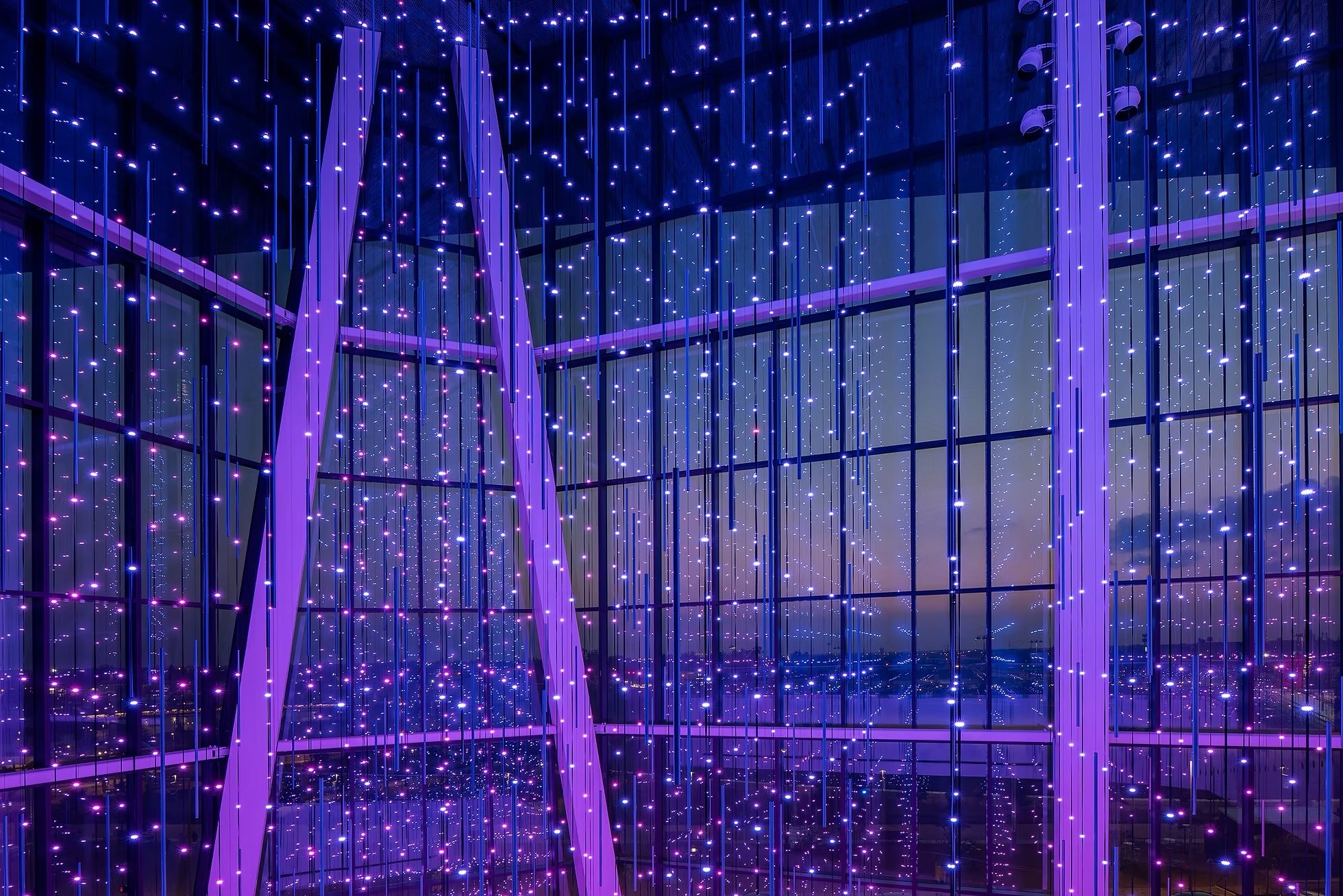
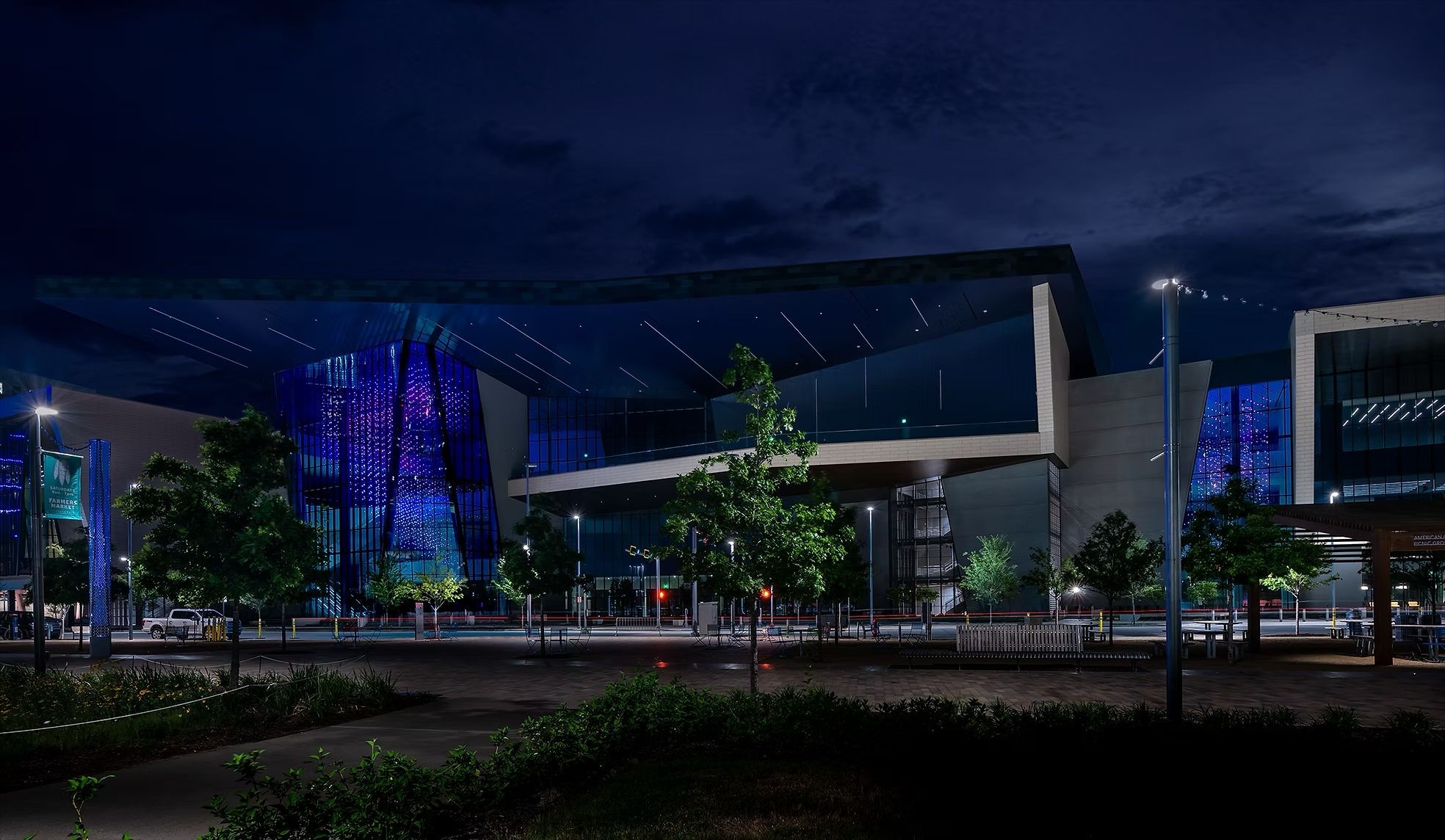
Virtual Sky is a monumental public artwork commissioned by the Oklahoma City Office of Arts & Cultural Affairs for the city’s new Convention Center. Designed by Narduli Studio, the installation spans the building’s two dramatic glass atriums, rising nearly seventy and ninety feet in height.
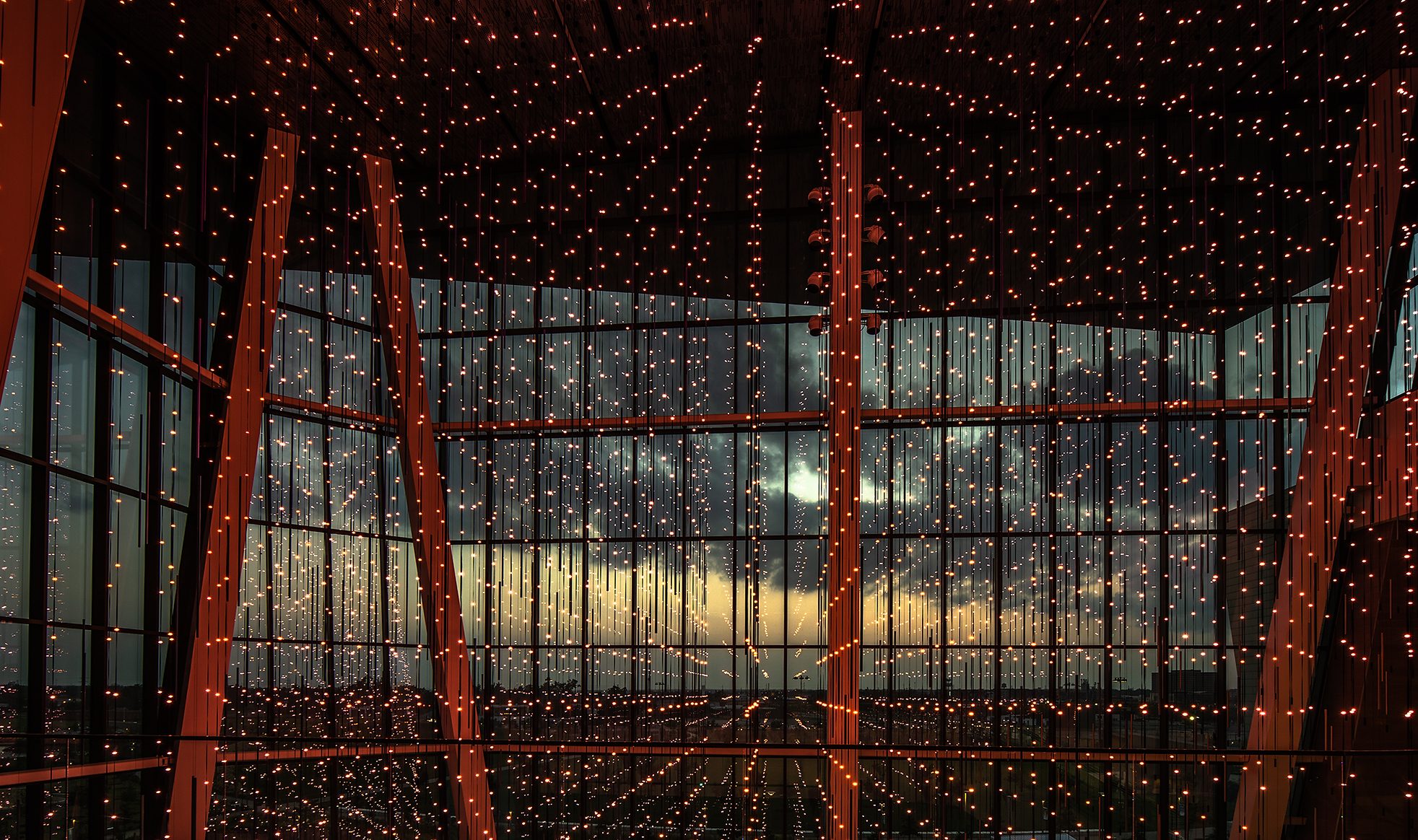
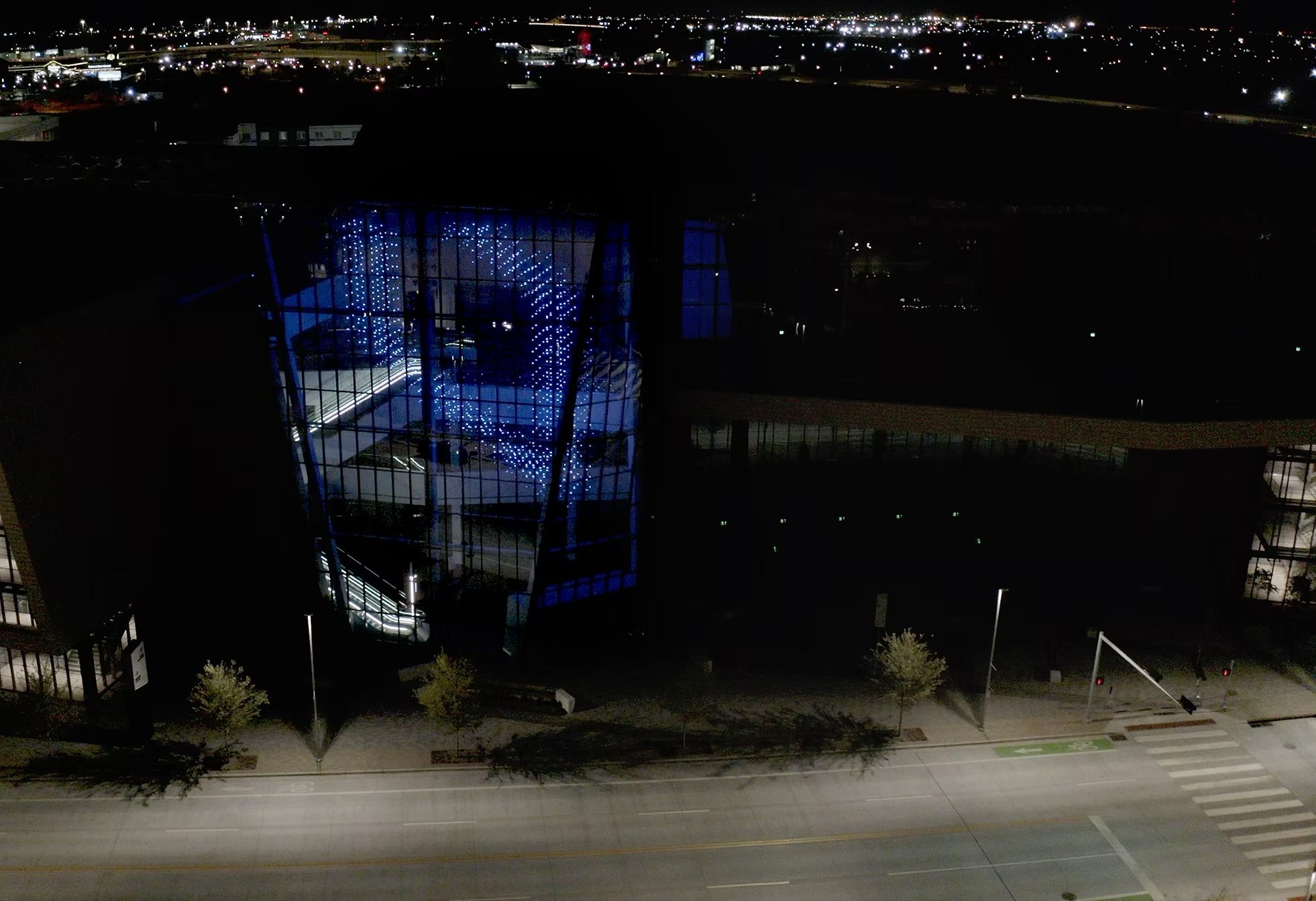
Suspended behind the glass façade, the sculpture forms a volumetric field of light composed of thousands of illuminated nodes and titanium tubes. Interpreting local weather data and atmospheric conditions, the installation transforms the movement and color of the Oklahoma sky into a continuously evolving digital environment visible both inside the atrium and from Scissortail City Park across the street.
Realizing this concept required a highly specialized LED system capable of delivering high brightness, full-color output while remaining visible from every direction within the space. The scale of the installation and its integration within the architecture demanded a carefully engineered solution that aligned structural systems, power distribution, and control infrastructure with the building itself.
APPROACH
5 TEN collaborated closely with Narduli Studio during the design engineering phase to develop a custom LED system capable of supporting both the visual language of the artwork and the architectural conditions of the atrium.
The concept was validated through a working prototype that tested the optical performance of the LED nodes alongside the electrical architecture, cooling strategies, and long-term heat dissipation of the system. Material studies were conducted in parallel to evaluate the finishes of the titanium tubes and ensure that the structural components reinforced the visual intent of the installation.
Because construction of the convention center was progressing rapidly, system documentation and infrastructure planning were developed early so that power, data, and structural supports could be integrated into the building ahead of the artwork’s installation.
The resulting system architecture enabled long-range power distribution across the installation and was reviewed and validated by structural engineer McLaren and electrical safety consultant Certifigroup.
SOLUTION
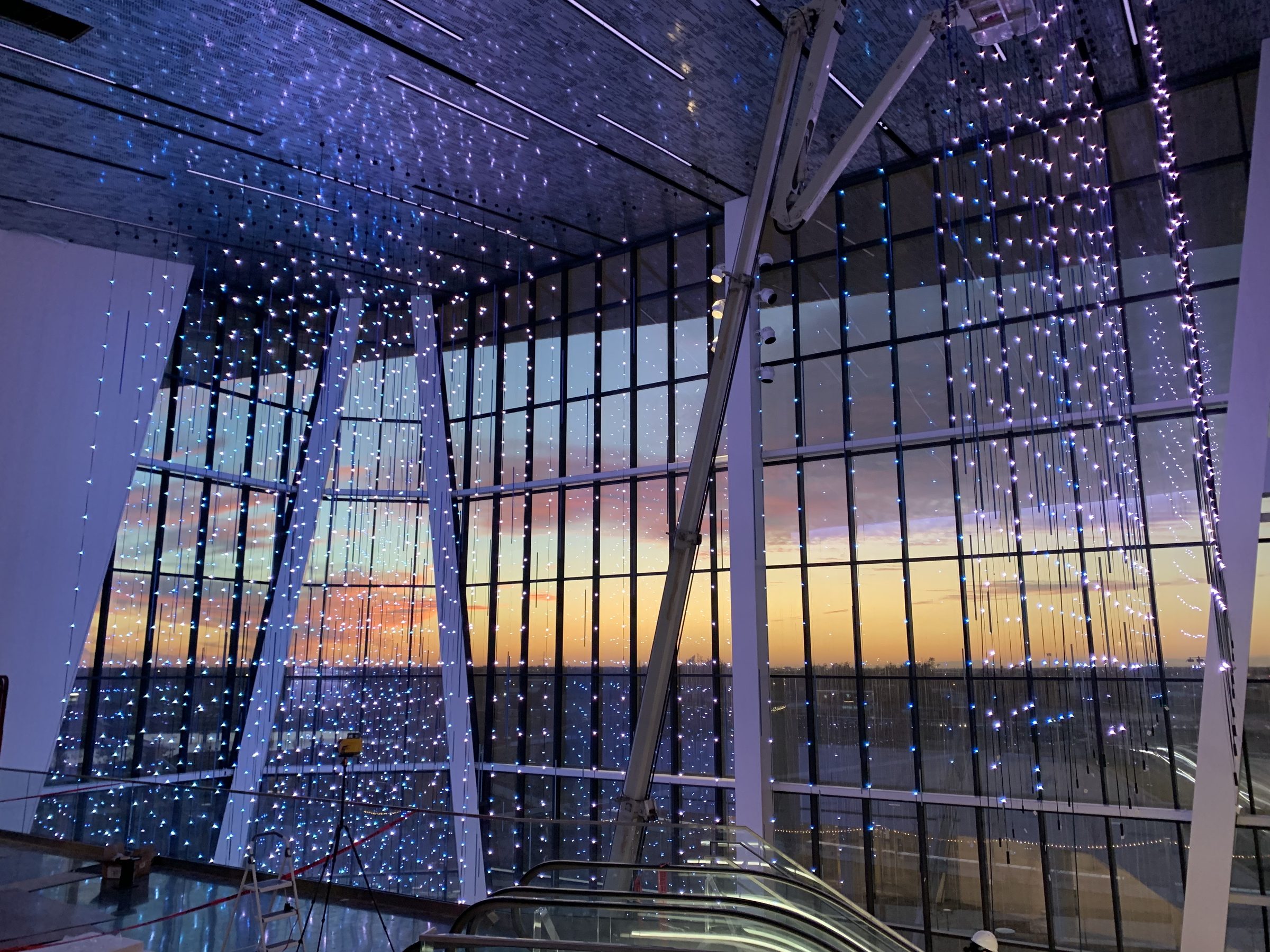
The completed installation integrates thousands of miniature high-brightness LED nodes arranged across hundreds of suspended strands within the atrium space. Nearly four thousand nodes were installed in the larger atrium and approximately twelve hundred nodes in the smaller atrium, forming a luminous three-dimensional field suspended between the building’s structural systems.
Each node is individually controllable and visible from all directions, allowing the sculpture to maintain visual continuity throughout the entire volume of the space.
Installation required close coordination between fabricators, engineers, and specialized rigging teams, with the strands suspended at heights of up to ninety feet using custom lifting equipment.
Working with media playback consultant Mode Studios, the system also incorporates a complete content playback and distribution architecture. Narduli Studio’s generative visual system was implemented using TouchDesigner and Universe, with a custom iPad interface allowing operators to transition between visual modes and artistic presets.
Featured Projects









Let's Work Together
Every project is a connection. From concept to delivery, we bring precision and artistry to every frame.


